|
|
|
|
[Issue 3/2024, January 31st]
|
|
IUBS BioNews
Dear members, supporters and friends of IUBS
At the beginning of 2024, IUBS drives its activities forward to address effectively central challenges in science policy, biology representation and governance this year. We ask for your support and wish you all the best for 2024.
Three main events in context of conservation and fair utilization of biodiversity are going to take place in May, October, and December 2024. The Subsidiary Body on Scientific, Technical and Technological Advice (SBSTTA) of the Convention on Biological Diversity (CBD) is scheduled for 13–18th May 2024 in Nairobi (Kenya). The next Biodiversity Conference of Parties (COP 16) of the CBD will convene in Bogota on the 21st Oct. to 1st Nov. 2024 (Colombia). The 11th session of the Intergovernmental Science Policy Platform on Biodiversity and Ecosystems Service (IPBES 11) is scheduled for 10-16th Dec. in Windhoek (Namibia).
Please inform us about your COP 16 participation. For many years, IUBS organizes the two day Science Forum as scientific program of the COP. If you or members of your organisation plan to participate in COP 16 in Bogota (Colombia), we ask you to kindly inform us, so we can get in contact with you and include you in the planning.
Please also read the views of our past president LS Shashidara on IUBS, the report from the meeting of the Ad Hoc Open-ended Working Group on Digital Sequence Information (WGDSI), the report on the closing session of the International Year of Basic Science for Sustainable Development (IYBSSD) in Geneva (Switzerland), about IUBS supported scientific meetings and much more. We are grateful to all of you who advance biology and provide input to our activities. Our request remains; please get engaged with us.
Another major aim of the Executive Committee of IUBS in 2024 is to deepen our information exchange and interaction with our ordinary, scientific and associate members, and toward this end we are going to contact you soon.
In this IUBS BioNews #3 you also read about three other IUBS executive committee members and their biological focus, so you know whom to address your questions.
With cordial greetings, your IUBS BioNews team
|
|
|
|
Updates
- ICS fellow nomination
- Aston institute
- Talk with former IUBS President
|
|
|
News
- WGDSI meeting
- IYBSSD closing ceremony
|
|
|
Conferences
- IDS26
- Molluscs of South India
- WDRN Symposium
|
|
|
|
|
IUBS EC Members
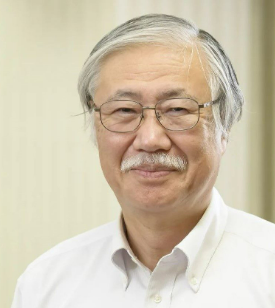
Ravinder Kohli Noriaki Murakami Guy Smagghe
|
|
|
IUBS Members
Learn more about the International Union of Photobiology
|
|
|
Webinar Series
Prospective talk(s) on role of AI in Biology... (details will be communicated soon)
|
|
|
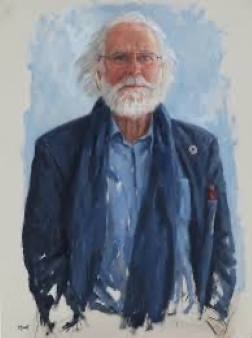
Nils Christian Stenseth appointed ISC Fellow 2023
The International Science Council (ISC) appointed our former IUBS president Nils Christian Stenseth from the Centre for Ecological and Evolutionary Synthesis (CEES), University of Oslo (Norway) as ISC Fellow upon nomination by IUBS. Since 2022, the ISC recognizes individuals for their outstanding contributions to the promotion of science by awarding the ISC Fellowship. The Fellowship is the highest honour that can be conferred on an individual by the ISC. We are grateful to Nils Christian Stenseth for his continued strong support to IUBS. (Painting by Tore Joell)
|
|
|
Former IUBS President shares his experience
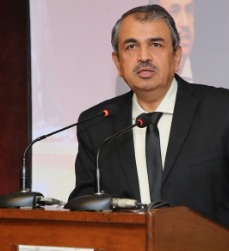
Prof. LS Shashidhara specializes in Genetics, Molecular Biology and Evolutionary biology. His group has identified key mechanisms that specify organ development and regulate growth control during embryonic development using Drosophila as a model system. Shashi is an elected fellow of Indian National Science Academy, which represents India in the IUBS. His contributions as researcher and member of several national and international organizations have been highly praised and recognized. In this feature interview he shares his experiences working with IUBS...
|
|
|
How was it like working with IUBS?
While my association with IUBS goes back to 2007 as a member of the IUBS national committee in India, I started working very closely on all aspects of IUBS activities when I was elected as member of its executive committee in 2012 and later as Secretary General in 2015. IUBS gave me a great opportunity to learn policy and science diplomacy matters, and contribute to the global policy on biodiversity, climate change and other such matters. I made great friends and as the immediate past president, I am still enjoying the warm affection, support and guidance that I am receiving from all over the world.
Can you highlight any programme or working group that highly contributes to IUBS mission and could serve as blueprint for similar activities?
IUBS stands for the living system as a whole. Over the past 100 years since its inception, biology has progressed enormously and is studied at various levels of size and complexity. As techniques used are so different, this has resulted in biology being studied under multiple well-defined disciplines (such as molecular biology, cell biology, neurobiology etc). However, IUBS has maintained its focus on holistic studies on biology at the ecological scale of complexity. Accordingly, topics such as genetics, evolution, biodiversity, ecosystem function and services, conservation, OneHealth etc are the main IUBS focus.
Given the impact of climate change, habitat degradation and increased mobility of people and material across the planet, IUBS has founded/co-founded key international programs to address the problem by identifying sustainable solutions. Science for Biodiversity Forum in collaboration with CBD, Biological Consequences of Global change, TROP ICSU (a climate change education program), Agroforestry, etc are a few examples of projects steered by IUBS in this direction. Latest in this list is setting up of a working group on Zoonotic diseases.
How can IUBS enhance the engagement of IUBS members or in other words why should IUBS members get engaged in IUBS activities?
What world is facing is problems of global scale. Solutions deployed only a few resource-plenty regions will not be sufficient as the problem will persist until it is addressed globally. International collaborations, therefore, is must. Unions such as IUBS are best suited as platform for ideation, developing global strategies and in monitoring the progress. All countries will benefit by their association with IUBS and by contributing to the joint efforts, benefits will be compounded.
How IUBS participate in addressing global challenges? IUBS participates in diverse fields of action. Can you comment from your experienced point of view whether specific fields should be prioritised or whether this broad engagement is the strength of IUBS?
These questions are partly addressed above. Broadening the engagement is key for the success of IUBS efforts. Increased membership base by proactively engaging with as many countries as possible will make the Union truly global. IUBS should connect and collaborate with other Unions and international platforms etc to bring multi-disciplinarily in all its projects. Given world is divided over how and how much efforts to put in for the conservation of biodiversity, IUBS should prioritise Science for Biodiversity forum. Given that it is in collaboration with CBD and every second year, there is an opportunity to work with large number of global recognised organisations and make an impact.
|
|
|
|
IUBS supports establishment of the Aston Institute for Membrane Excellence
Membranes as barriers and interface were the starting point of evolution of life and are of utmost importance in science, medicine and technology. Aston University (UK) will establish the Aston Institute for Membrane Excellence (AIME) with the aim to develop novel biomimetic membranes in a cross-disciplinary endeavour. IUBS provided a letter of support and intent of cooperation for the application that was successful. AIME receives a major grant of £10m from Research England. IUBS wishes success in setting up this important institute.
|
|
|
News section of IUBS BioNews
|
|
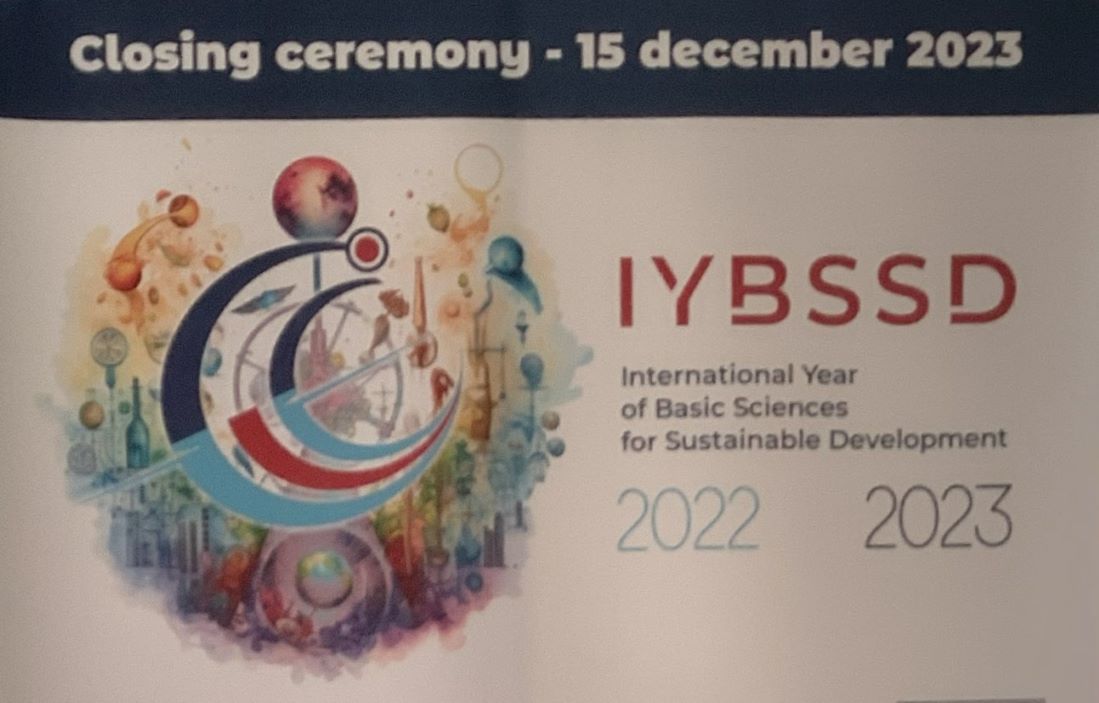
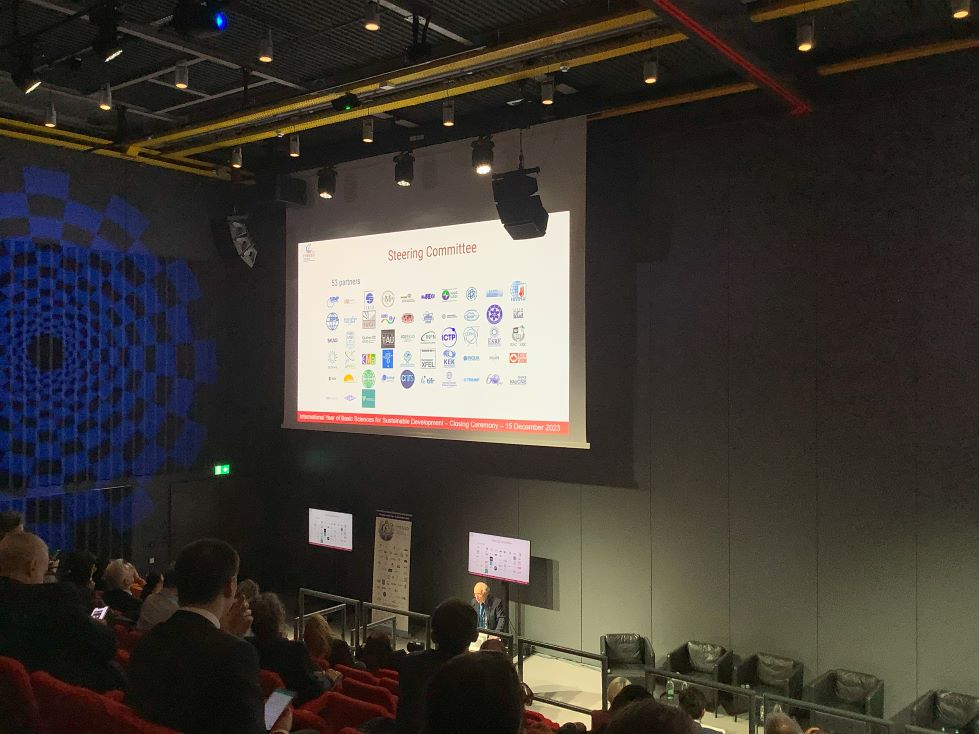
The Closing Ceremony of the International Year of Basic Sciences for Sustainable Development (IYBSSD) took place at the new Science Gateway building in CERN, Geneva, Switzerland on 14 December 2023. The ceremony served as a reflective capstone to a year filled with insightful discussions, groundbreaking research, and notable 400 events organized in more than 70 countries. Early-career scientists were at the forefront during the morning sessions, emphasizing their contributions to science and society. A significant outcome of the event was the proclamation of the International Decade of Sciences for Sustainable Development (2024-2033) by the United Nations General Assembly, discussed by high-level representatives.
IUBS, as a member of the IYBSSD Steering Committee, extends its gratitude to the 53 partner organizations and 123 supporters who contributed to this global initiative and eagerly anticipate ongoing collaborations for the continued advancement of sustainable development through International Decade of Sciences for Sustainable Development.
|
|
|
First meeting of Working Group on Digital Sequence Information (WGDSI)
|
|
|
The 1st meeting of the Working Group on Digital Sequence Information (WGDSI-01) was held in Nov. 14-17th, 2023 in Geneva, Switzerland. Since Nagoya Protocol adoption in 2014, the benefit sharing from use of digital sequence information (DSI) derived from physical samples from different countries of origin has remained a contentious issue. Parties to the Convention of Biological Diversity (CBD), after COP15, reached agreement on negotiating through two Ad hoc open-ended Working Group meetings between COP15 and COP16 to establish multilateral benefit sharing mechanisms for the use of DSI. The agenda for the meeting was set through issues clubbed into five clusters by the CBD secretariate. At the start of negotiations, the Access and Benefit Sharing (ABS) positions of parties were established with focus on continual co-existence of multilateral but also preexisting national bilateral-sharing mechanisms. The final elements on which there is potenial convergence and the elements on which there is a need for further discussion are listed in the document CBD/WGDSI/1/L.2. Jens Sundström represented IUBS at the meeting. He participated in plenary discussions and evening contact group meetings. He co-ordinated his activities with the DSI network led by Amber Scholz. The consensus in this network is that the mulilateral benefit-sharing mechanisms must be consistent with open access to data and that access to DSI should not be a triggering point for benefit-sharing. Jens also had informal contacts with representatives from different countries and conveyed the same message.
|
|
|
IUBS Sponsored Conferences
|
|
|
IUBS supports the organization of international Conferences and Workshops in IUBS member countries. Applications are reviewed every trimester by the IUBS Executive Committees. Conferences awarded should have women involved in the organizing/scientific committees and there should be a gender balance in the list of the invited speakers. Two conferences have recently benefited from IUBS sponsoring:
|
|
|
2023 International Diatom Symposium
|
|
|
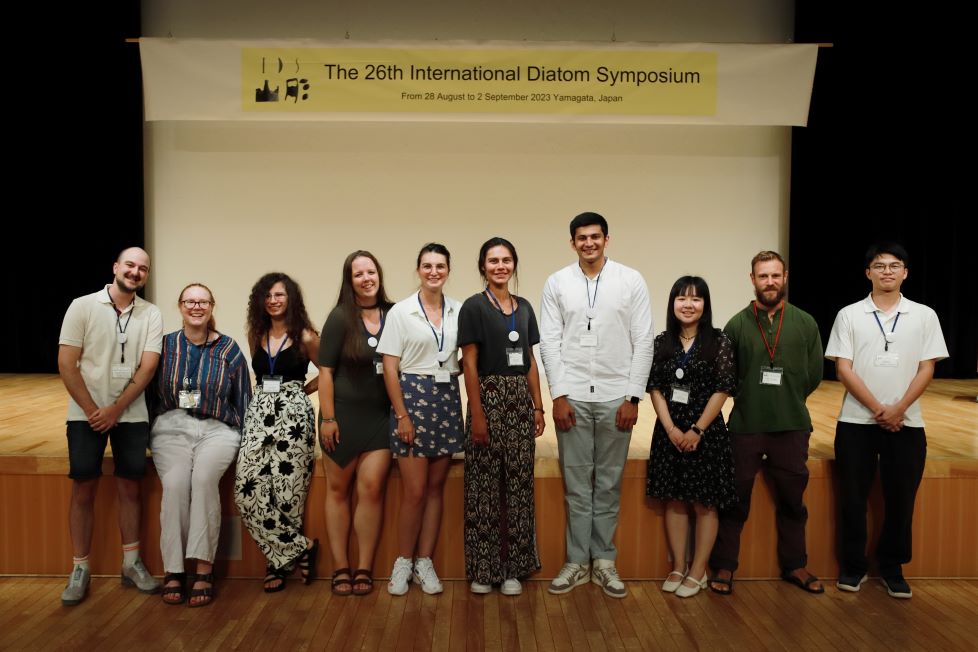
Diatoms are photoautotrophic algae that dominate the oceans and certain fresh water environments. They have outstanding ecological significance and a huge biotechnological potential. IUBS sponsored the participation of 10 early career scientists at the 26th International Diatom Symposium (IDS26) that took place in Yamagata (Japan) from 28 August to 2 September 2023. Apart from discussing current progress in diatom ecology, systematics and molecular biology, the early career scientists were invited to participate in workshops tailored for them to get exposure to machine learning and bioinformatics.
|
|
|
The 1st ever conference converging research, conservation and livelihood around Molluscs of South Asia was held in Royal Orchid Resort and Convention Centre, Bangalore, India between 11-13th of Dec. 2023. The conference also commemorated the life and work of H.H. Godwin-Austen, an English naturalist, topographer, geologist, and surveyor, who made significant contributions to our current understanding of the terrestrial molluscs of the Indian subcontinent. This conference has been organized by Ashoka Trust for Research in Ecology and the Environment (ATREE), a non-profit organization dedicated to producing interdisciplinary knowledge that informs conservation and sustainability policies and practices, along with the Freshwater Ecology and Conservation lab. ATREE envisions to create a society committed to environmental conservation and sustainable, socially just development. The event received support from IUBS, along with many other international organizations.
|
|
|
|
IUBS triennial scientific programme organized event:
WDRN symposium
|
|
|
The IUBS triennial scientific programme “Zoonotic Disease Coordination Network” has organized, among its activities, the 2nd International Symposium of Wildlife Diseases Research Network (WDRN). The symposium, coordinated by IUBS and ISZS, a scientific member of IUBS, was held in Beijing, China between 5-7th Dec. 2023. WDRN will hold further annual symposia, workshops, training programs, and publish annual reports related to wildlife diseases. The 3rd international symposium has been planned to be organized in Colombia in Nov. 2024. The organized symposium was aimed at strengthening of research capacity on wildlife diseases with increased international collaborations, as well as improving prevention and control of such diseases in wild or domesticated animals and humans.
|
|
|
The IUBS EC Members 2023-2026
|
|
|
Following the 6 EC Members presented in the earliar BioNews#1, 2, we continue in this section to introduce EC Members who have been elected at the last General Assembly in Tokyo.
|
|
|
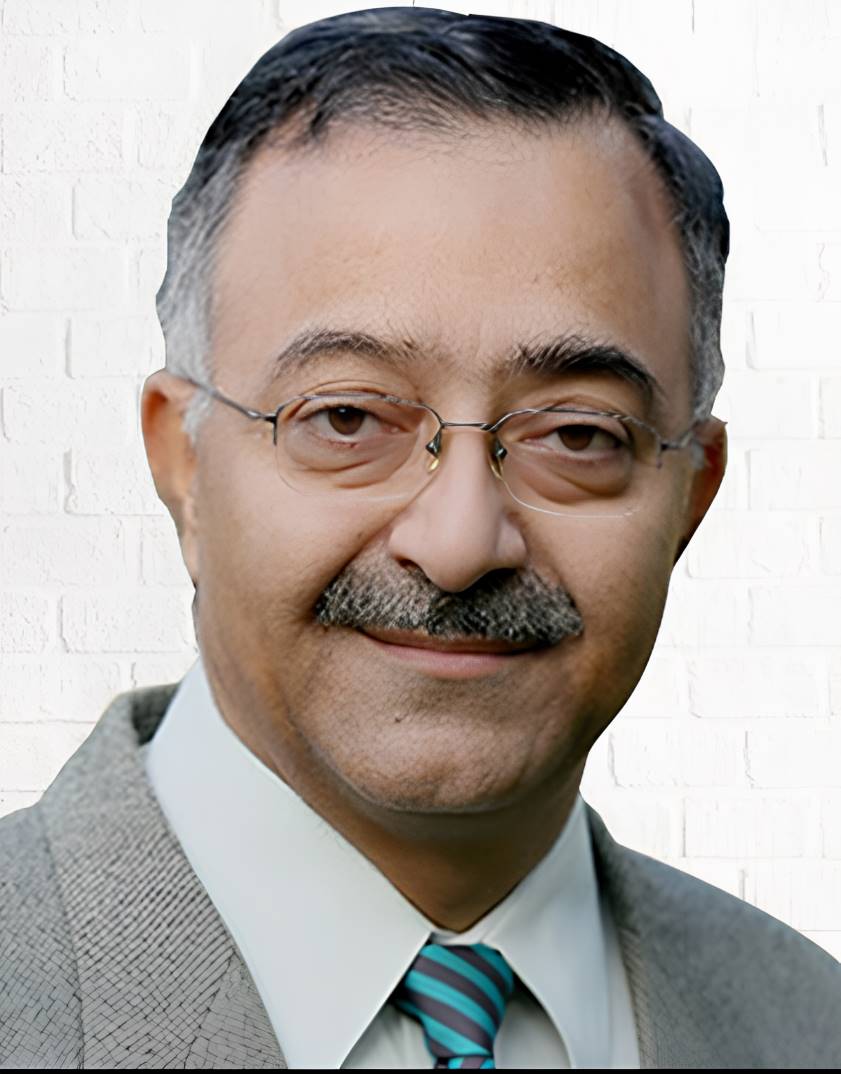
Prof. RK Kohli, currently serving as the Vice-Chancellor of Amity University Punjab, is a distinguished scientist and academic leader with extensive contributions to the field of biology. As a fellow of all four National Science Academies of India and a fellow of the Royal Society (FRS) in Biology and Chemistry in London, he has made significant strides in his career. In his significant roles at IUFRO (International Union of Forest Research Organizations), Prof. Kohli served as coordinator for two key working parties and was a member of the Task Force on Forests and Biological Invasions (2015-2020).
|
|
|
|
His global contributions extend to mentoring 54 Ph.D. students, resulting in an impressive publication record and citations. His groundbreaking research focused on invasive alien weeds (IAWs), exploring their impact on native ecology. Prof. Kohli demonstrated how IAWs, through allelopathic interactions, affect biodiversity and productivity in various habitats. Pioneering the use of essential oils from aromatic plants, he introduced eco-friendly solutions for sustainable weed management.
With a commitment to strengthening IUBS, Prof. Kohli aims to expand memberships under the EC's guidance. He proposes a task force addressing alien plant invasion, emphasizing biodiversity preservation, restoration, and the promotion of ecological economics for broader public understanding.
|
|
|
Professor N Murakami is curator of Makino Herbarium, Tokyo Metropolitan University, Japan. As plant taxonomist, he has been active in conducting research to clarify species diversity, speciation and evolution of land plants and fungi, actively using genomic information. His primary interest is in clarifying cryptic species, or in describing different biological species with similar gross morphology. His research group has clarified that more than 50 cryptic species were contained in one morphological fern species, Asplenium nidus L. which was believed to have very wide geographical distribution throughout the Old-World tropics.
|
|
|
|
He has also conducted research on species diversity of independent gametophytes which can reproduce asexually through gemma for several thousand years, as well as those on reticulate evolution of apogamously reproducing ferns, which usually reproduce only asexually through spores but can sometimes hybridize with several related sexual species. He has intensively worked on promotion of appropriate measures for Access to the genetic resources and Benefit Sharing (ABS) in Japan, conservation of biodiversity especially in Asia, and establishment of natural history museum in Japan collaborating with the Science Council of Japan.
His research very much aligns with the goals of IUBS and its recent activities especially concerning conservation, environmental issues, gender equality and particular efforts to expand biological ethics and education. As an EC member, he wishes to continue to support IUBS especially in the missions of biodiversity conservation, ABS and education.
|
|
|
|
Prof. G. Smagghe, born in 1968 Belgium developed a fascination for insects and metamorphosis early in his childhood. After his masters in agronomy and entomology at Ghent University his doctoral research explored the intricate processes of insect growth and metamorphosis. Throughout his academic career, he had research grants in Belgium, Spain, Switzerland, and the USA, leading projects in diverse locations, including the EU, Kenya, Brazil, and China. He is known for his innovative research in insect physiology, biochemistry, and (eco)toxicology.
|
|
|
|
He has trained individuals from around the world, supporting over 250 young talents from 36 countries during their master’s or Ph.D. degrees. He is committed to the promotion of sustainable and green agriculture to address the challenges of feeding a growing global population, emphasizing the urgency for biodiversity and sustainability. His extensive research interests, particularly in insects and agriculture sciences align with the crucial role of IUBS as a global platform for collaboration across biological disciplines.
He strongly identifies with the emphasis on research, training, and education, exemplified by initiatives like the pollution-tolerant and climate change-resilient plants project in Bangladesh in IUBS. Within IUBS, he contributes as a member of the Gender Equality Working Group, advocating for women's equal participation in science. As member of the EC, he strives to promote vital topics such as sustainable agriculture, biodiversity loss, and climate change.
|
|
|
Spotlight history – how IUBS shaped the self organization of biosciences
|
|
|
The history and activities of the international federations and societies in the various biodisciplines were always closely linked to IUBS. Close to 90 international societies nowadays are scientific members of IUBS. The new Executive Committee of IUBS wishes to strengthen its relationship with its scientific members. We are planning to contact you, the representatives of the scientific members, to explore ways of teaming up with you in times of urgent need for input of biology into policy making and for reaching the sustainable development goals.
|
|
|
International Union of Photobiology
|
|
Established as the Comité International de la Lumière in 1928, it evolved through various stages, transforming into the Association Internationale de Photobiologie (AIP) in 1976 and finally adopting its current name, the International Union of Photobiology, in 2000. Spanning a diverse range of disciplines, photobiology encompasses photophysics, photochemistry, and photosensory biology, extending into photomedicine, environmental photobiology, and applied technological aspects like bioimaging and nanotechnologies.
The mission of IUPB is to foster scientific research and global collaboration in photobiological sciences. It welcomes members from international and national photobiology groups, as well as individuals from countries lacking such organizations. Notable activities include awarding the Finsen Medal, Edna Roe lecture, and Finsen Lecture, and organizing the International Congress on Photobiology (ICP) every 4-5 years. IUPB, a scientific member of IUBS, collaborates with the latter in addressing crucial societal issues related to climate change effects on health, ecosystems, and emerging biotechnologies, aligning with IUBS-sponsored research programs. The upcoming 18th ICP is scheduled for August 25-30, 2024, in Perth, Western Australia.
|
|
|
The following people have contributed to the newsletter:
Karl-Josef Dietz, Nathalie Fomproix, Ravinder Kohli, Vijay Kumar, Noriaki Murakami, Jens Sundström, Evelyne Sage, Guy Smagghe, Nils Christian Stenseth, Zhibin Zhang.
|
|
|
|
|